
AI inventory management solutions are software platforms that use machine learning to predict demand, track stock in real time, and automate reordering so businesses stop guessing and start planning. Instead of relying on static spreadsheets, these tools continuously learn from sales history, seasonality, and supplier lead times. As a result, companies of every size can cut both stockouts and excess stock without hiring extra planning staff.
In particular, retailers and manufacturers have struggled for years with the same tension: order too little and lose sales, order too much and tie up cash in warehouses. Consequently, interest in AI-driven inventory tools has grown fast across retail, distribution, and healthcare supply chains. This guide breaks down what these systems actually do, how to evaluate them, and what to watch for when choosing a platform for 2026.
What Are AI Inventory Management Solutions?
Direct answer: AI inventory management solutions combine demand forecasting, automated replenishment, and real-time stock tracking in one system, using machine learning instead of fixed rules. They continuously adjust predictions as new sales, weather, or supply data arrives.
To elaborate, these platforms ingest data from point-of-sale systems, warehouse management software, and supplier feeds. Then, a forecasting model (a statistical system trained on historical patterns) estimates how much of each product will sell over a given period. Based on that estimate, the system can automatically generate purchase orders, suggest transfers between locations, or flag items at risk of stocking out.
Unlike older rule-based systems, which simply reorder when stock hits a fixed number, AI inventory management software recalculates that threshold constantly. For example, it might raise safety stock automatically before a known seasonal spike, then lower it again once demand normalizes. This adaptability is why many operations teams now treat forecasting accuracy as a core performance metric, not an afterthought.
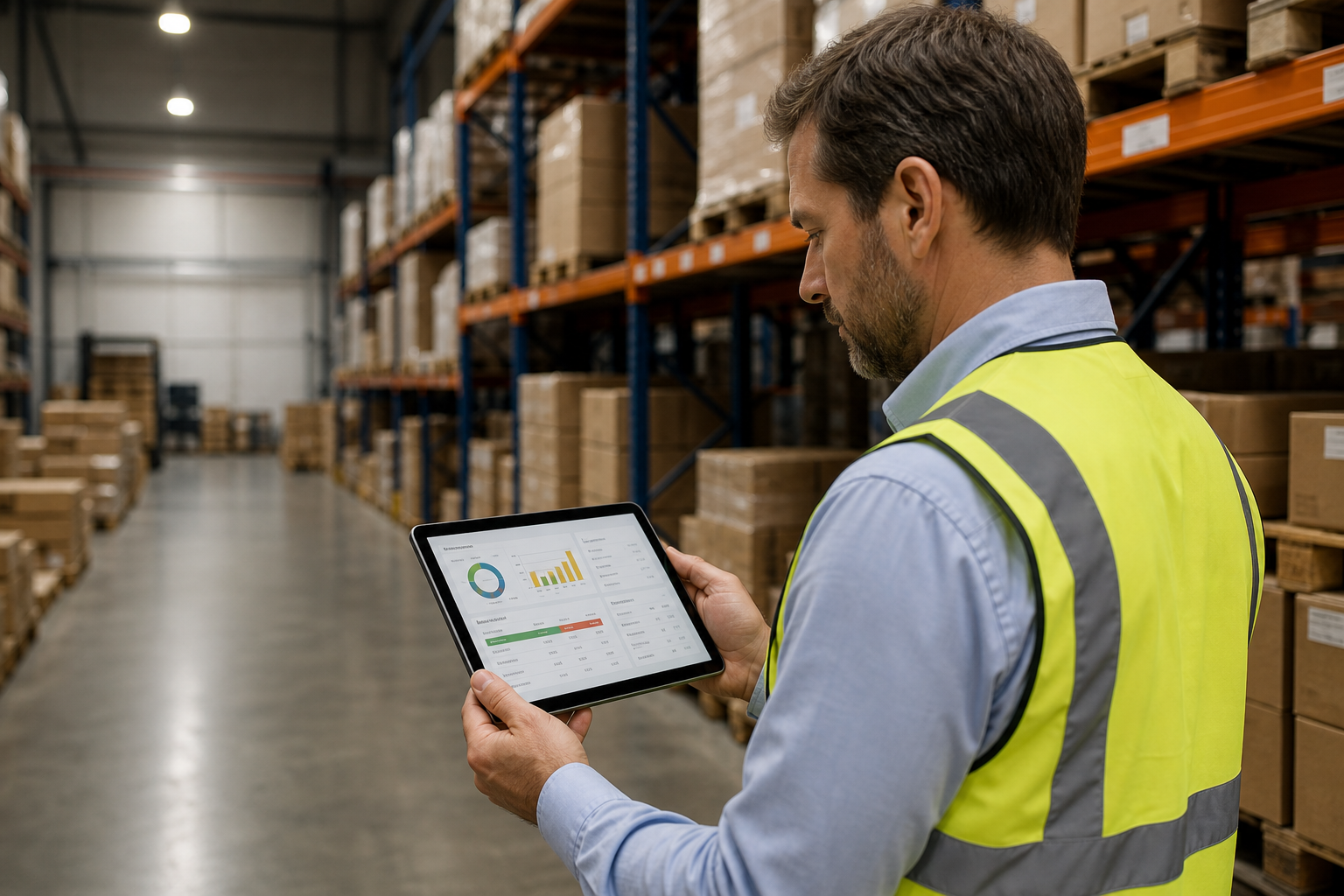
AI inventory management solutions give warehouse teams a live, data-driven view of stock levels.
Why Businesses Are Adopting AI-Driven Inventory Tools
Supply chains have become harder to predict, and that is precisely why interest in AI-driven inventory tools keeps climbing. Disruptions to shipping, sudden demand swings, and tighter margins all push businesses toward systems that can react faster than a quarterly spreadsheet review. In addition, labor shortages in planning roles make automation more attractive than ever.
According to the overview of inventory management software on Wikipedia, modern systems increasingly incorporate predictive analytics to reduce manual planning work. Meanwhile, government economic data from the U.S. Census Bureau's Manufacturing and Trade Inventories and Sales program shows how closely inventory levels track with broader economic shifts, underscoring why accurate forecasting matters at a macro level, not just within a single warehouse.
Specifically, three pressures drive adoption. First, rising storage and capital costs make excess stock expensive to carry. Second, customers now expect fast fulfillment, which punishes stockouts harshly. Third, finance teams want tighter visibility into working capital tied up in goods on shelves. Together, these pressures explain why forecasting and automation have moved from a nice-to-have to a budget priority for 2026 planning cycles.
Core Features to Look for in AI Inventory Management Software
Not every platform calling itself "AI-powered" delivers the same depth of capability. Therefore, it helps to evaluate vendors against a consistent checklist rather than marketing claims alone.
| Feature | Why It Matters |
|---|---|
| Demand forecasting engine | Predicts future sales at SKU level, including seasonality and promotions |
| Automated replenishment | Generates or triggers purchase orders without manual calculation |
| Multi-location visibility | Shows stock across warehouses and stores in one dashboard |
| Anomaly alerts | Flags unusual order spikes, shrinkage, or data errors quickly |
| Role-based access and governance | Controls who can approve automated orders or view sensitive data |
Beyond the checklist, consider how well a platform explains its own forecasts. Specifically, systems that show why a reorder was suggested build more trust with planning teams than pure black-box recommendations. This transparency becomes especially important as businesses scale automation across hundreds of SKUs.
How to Implement AI Inventory Management Solutions
Rolling out automation across an entire supply chain overnight rarely works well. Instead, a staged approach reduces risk and builds internal confidence in the new system.
- Audit current inventory data. Review how sales, warehouse, and supplier data are currently recorded, and fix gaps before connecting any AI system to that data.
- Define success metrics. Set measurable targets such as stockout rate, carrying cost percentage, and forecast accuracy so results can be judged objectively.
- Run a limited pilot. Deploy the software on a single warehouse or category first, then compare its forecast accuracy against your historical manual process.
- Connect governance and security controls. Set approval thresholds for automated reorders and monitoring so unusual patterns get flagged before they cause losses. For a practical look at how anomaly monitoring works in production AI systems, see this guide on responding to an anomaly.
- Scale and retrain regularly. Extend the platform to more locations once the pilot proves reliable, and schedule periodic retraining as demand patterns shift.
Throughout this process, finance teams should also track the ongoing cost of running AI models at scale. A useful companion resource here is this breakdown of token economics and AI costs at scale, which explains how usage-based AI pricing can affect long-term platform budgets.
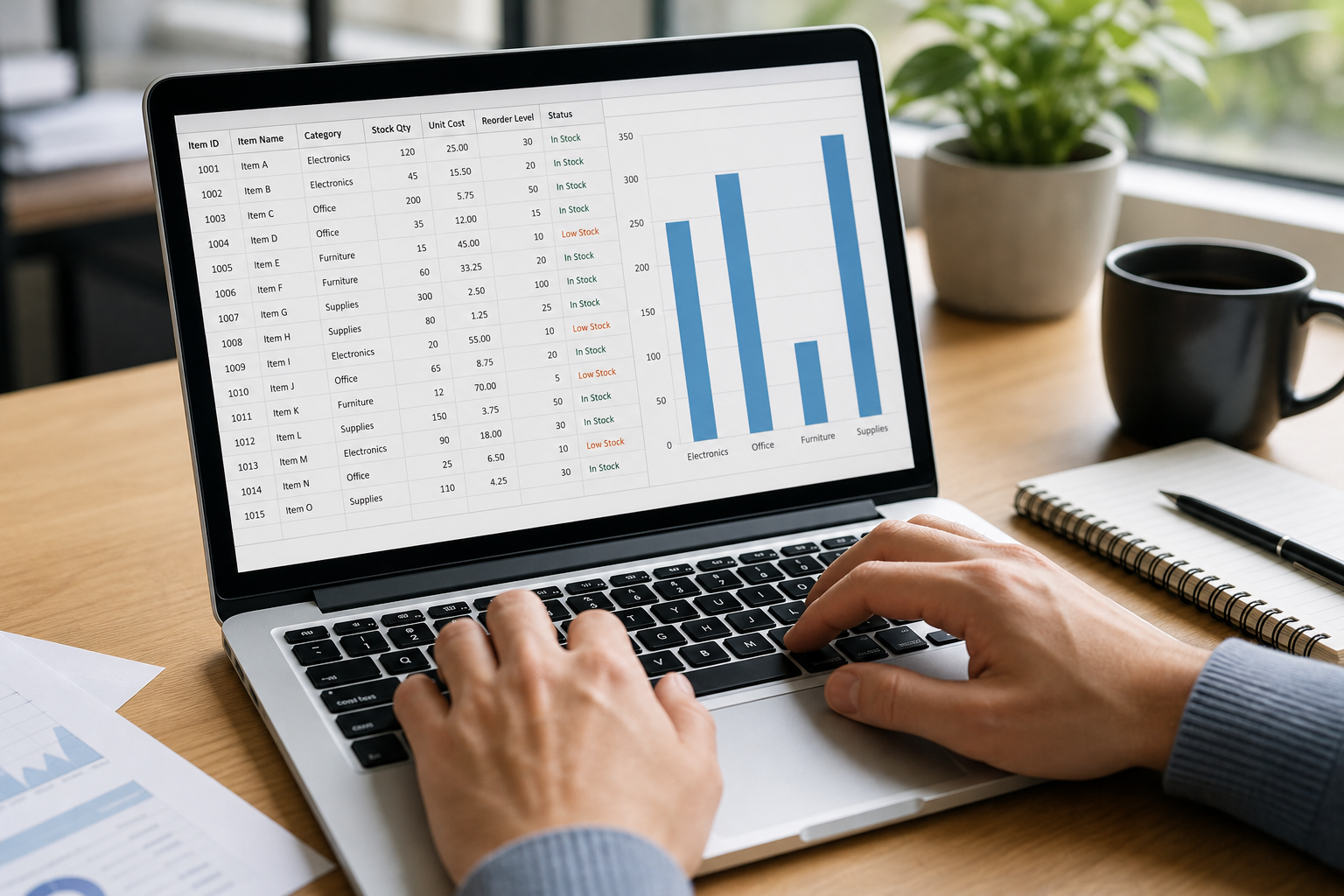
A staged rollout helps teams trust AI inventory management solutions before scaling company-wide.
AI Inventory Platforms vs. Traditional Inventory Systems
Traditional inventory software typically relies on fixed reorder points set manually and revisited only occasionally. In contrast, AI inventory platforms recalculate those thresholds continuously as new sales and supply data arrive. This difference matters most during volatile periods, such as holiday spikes or sudden supplier delays, when static rules fall behind reality quickly.
Research summarized by McKinsey & Company has noted that organizations applying machine learning to supply chain forecasting have reduced forecasting errors by 20 to 50 percent compared with manual approaches. Although results vary by industry and data quality, even a modest accuracy gain translates into meaningfully lower carrying costs and fewer missed sales at scale.
However, traditional systems still have a place for very small, low-complexity operations with few SKUs and stable demand. For most growing or multi-location businesses, though, the flexibility of AI-driven inventory tools outweighs the simplicity of static rules.
Data Security and Governance in Inventory AI Software
Inventory data often reveals sensitive business information, including pricing strategy, supplier relationships, and sales volume. Therefore, security cannot be an afterthought when selecting AI inventory management software. Look for platforms offering encryption, role-based access, and audit trails for automated decisions.
The NIST AI Risk Management Framework offers a useful reference point for evaluating how vendors manage risks like data exposure and model drift. Specifically, it encourages organizations to document how AI-driven decisions are monitored and corrected over time, which applies directly to automated reordering systems.
For businesses handling larger volumes of sensitive operational data across multiple AI tools, a unified governance layer becomes especially valuable. Platforms such as AOCore route requests through built-in guardrails and anomaly detection, which is useful context for teams comparing security postures across AI vendors. Likewise, this guide on levels of AI spend governance explains how budget and approval controls can prevent runaway automated purchasing.
Choosing the Right AI Inventory Management Platform
Ultimately, the right choice depends on company size, existing systems, and how much automation leadership is comfortable approving without human review. Small businesses often prioritize ease of setup and transparent pricing, while larger enterprises weigh integration depth and governance controls more heavily.
For businesses that need inventory forecasting connected directly to finance, procurement, and document management rather than operating as an isolated tool, an integrated business suite can reduce data silos. Eden Biz, for instance, combines inventory with CRM, HR, finance, and procurement on a single data layer, which avoids the reconciliation work that comes from running separate point solutions.
Teams also building custom AI-powered search over supplier contracts or product catalogs may find value in retrieval-augmented systems, explained further in this piece on enterprise RAG with citations. As a next step, visiting aocyber.ai provides a closer look at how these pieces fit together for businesses evaluating a full-stack approach.

Even small operations can apply AI inventory management solutions through mobile-friendly tools.
Frequently Asked Questions About AI Inventory Management Solutions
What are AI inventory management solutions?
AI inventory management solutions are software platforms that use machine learning to forecast demand, track stock levels, and automate reordering decisions in real time. They replace manual spreadsheets and static reorder points with models that adapt to changing sales patterns.
How do AI inventory management solutions work?
They pull data from point-of-sale systems, warehouses, and suppliers, then apply predictive models to estimate future demand. The system then suggests or automatically triggers purchase orders, transfers, or markdowns based on those forecasts.
How much do AI inventory management platforms cost?
Pricing varies widely, from modest monthly fees for small-business tools to custom enterprise contracts for large retailers or manufacturers. Most vendors offer tiered plans based on SKU count, order volume, or number of integrated locations.
How long does it take to implement an AI inventory system?
A straightforward integration with existing point-of-sale or ERP data can take two to six weeks. More complex deployments involving multiple warehouses or custom data pipelines often take two to four months.
What is the difference between AI inventory management solutions and traditional inventory software?
Traditional inventory software relies on fixed reorder points and manual forecasts, while AI inventory management solutions continuously learn from new sales and supply data. As a result, AI-driven tools adapt faster to seasonality, promotions, and supply disruptions.
Can small businesses benefit from AI inventory management solutions?
Yes, small businesses often see fast returns because AI tools catch overstock and stockouts that manual tracking misses. Even a modest reduction in excess inventory can free up meaningful cash flow for a growing business.
What common mistakes do businesses make when adopting AI inventory tools?
The most frequent mistake is feeding the AI incomplete or inconsistent data, which produces unreliable forecasts. Another common error is skipping a pilot phase and rolling out automation across every location before validating the model's accuracy.
Do AI inventory management solutions integrate with existing ERP or accounting software?
Most modern platforms offer APIs or prebuilt connectors for popular ERP, point-of-sale, and accounting systems. Integration depth varies, so it is worth confirming connector support for your specific stack before purchasing.
How accurate is AI demand forecasting compared to manual forecasting?
Industry research has found AI-based forecasting can reduce errors by 20 to 50 percent compared with manual methods, particularly for products with volatile or seasonal demand. Accuracy still depends heavily on data quality and how frequently the model is retrained.
Is my inventory and sales data secure with an AI inventory platform?
Security depends on the vendor's architecture, so look for platforms offering role-based access, encryption, and clear data-ownership policies. Enterprises handling sensitive supply chain data should also ask whether the vendor supports audit logging and anomaly detection.
What industries benefit most from AI inventory management solutions?
Retail, manufacturing, distribution, and healthcare supply chains see some of the largest gains because they manage high SKU counts and unpredictable demand. Any business juggling multiple warehouses or sales channels is a strong candidate.
Can AI inventory management solutions reduce carrying costs?
Yes, by predicting demand more precisely, these tools help businesses hold less safety stock without increasing stockout risk. Lower average inventory directly reduces warehousing, insurance, and capital-tied-up costs.
Should I choose a standalone AI inventory tool or an integrated business suite?
Standalone tools often integrate faster but can create data silos, while an integrated suite keeps inventory, finance, and procurement on one data layer. Growing businesses frequently prefer the integrated approach once they outgrow spreadsheets and disconnected point tools.
Final Takeaways
In summary, AI inventory management solutions give businesses a far more accurate, real-time view of stock than manual spreadsheets or static reorder rules ever could. They reduce both stockouts and excess inventory by learning continuously from sales, supplier, and seasonal data. However, success depends on clean data, a staged rollout, and strong governance around automated decisions.
Above all, businesses evaluating these platforms should prioritize transparency, security, and integration depth over flashy automation claims. Whether a company chooses a standalone forecasting tool or an integrated suite that connects inventory to finance and procurement, the right AI inventory management solution should fit existing workflows rather than force a complete overhaul.

