Private AI workspace software gives individuals and teams a secure, self-contained place to chat with AI models, search internal documents, and generate content without exposing sensitive information to a third-party chatbot. Unlike mainstream assistants that frequently retain or train on conversation data, a true private AI workspace keeps memory, files, and generated output under the owner's control. For regulated industries, government contractors, and growing businesses alike, that distinction between convenience and real data ownership often decides whether an AI deployment is safe to scale. This article walks through what private AI workspace software actually does, which features matter most, and how to evaluate a provider such as AOCyber.
What Is Private AI Workspace Software?
Private AI workspace software is a dedicated AI environment, like AODex, that stores conversations, documents, and personas on infrastructure the user or organization controls, instead of a public cloud model that may train on customer data. It typically combines persistent memory, retrieval-augmented search over internal files, tuned AI personas, and export tools so users can audit or delete their own data at any time.
In practice, this means a marketing team can upload internal brand guidelines, ask an AI persona to draft campaigns using that private knowledge base, and know the material never leaves the workspace. Meanwhile, a solo developer can keep a running memory of project context across sessions without re-explaining the codebase every time. Because the underlying model is hosted by the provider rather than routed through unrelated third parties, the attack surface for data leakage shrinks considerably.
Why Teams Need a Private AI Workspace
Public AI chatbots are convenient, but convenience often comes at a cost. Many free-tier services reserve the right to use submitted prompts for model training, which creates real exposure for businesses handling client data, trade secrets, or regulated records. Consequently, compliance teams increasingly push back on unrestricted AI adoption.
In contrast, a private AI workspace separates the user's data from the provider's model-training pipeline entirely. For example, AOCyber's AODex workspace runs on AI infrastructure hosted by AOCyber itself, rather than routing requests through unrelated third-party model providers, so organizations retain a clear chain of custody for every prompt and response. Similarly, freelancers and small businesses benefit because they can experiment with AI-assisted writing, research, and image generation without wondering where their drafts end up.
Core Features of a Secure AI Workspace
Most buyers evaluating a secure AI workspace look for a consistent set of capabilities. Specifically, the following features distinguish genuine private AI workspace software from a repackaged public chatbot:
- Persistent memory — the assistant remembers prior context across sessions instead of forgetting everything after each chat.
- Knowledge-base search (RAG) — the workspace retrieves answers from internal documents rather than guessing, a technique known as retrieval-augmented generation.
- Tuned personas — custom AI personalities configured for specific roles, such as a legal research assistant or a support agent.
- Image generation and web search — built-in creative and research tools that stay inside the same private environment.
- Conversation export — the ability to download or delete full chat history on demand, supporting data portability.
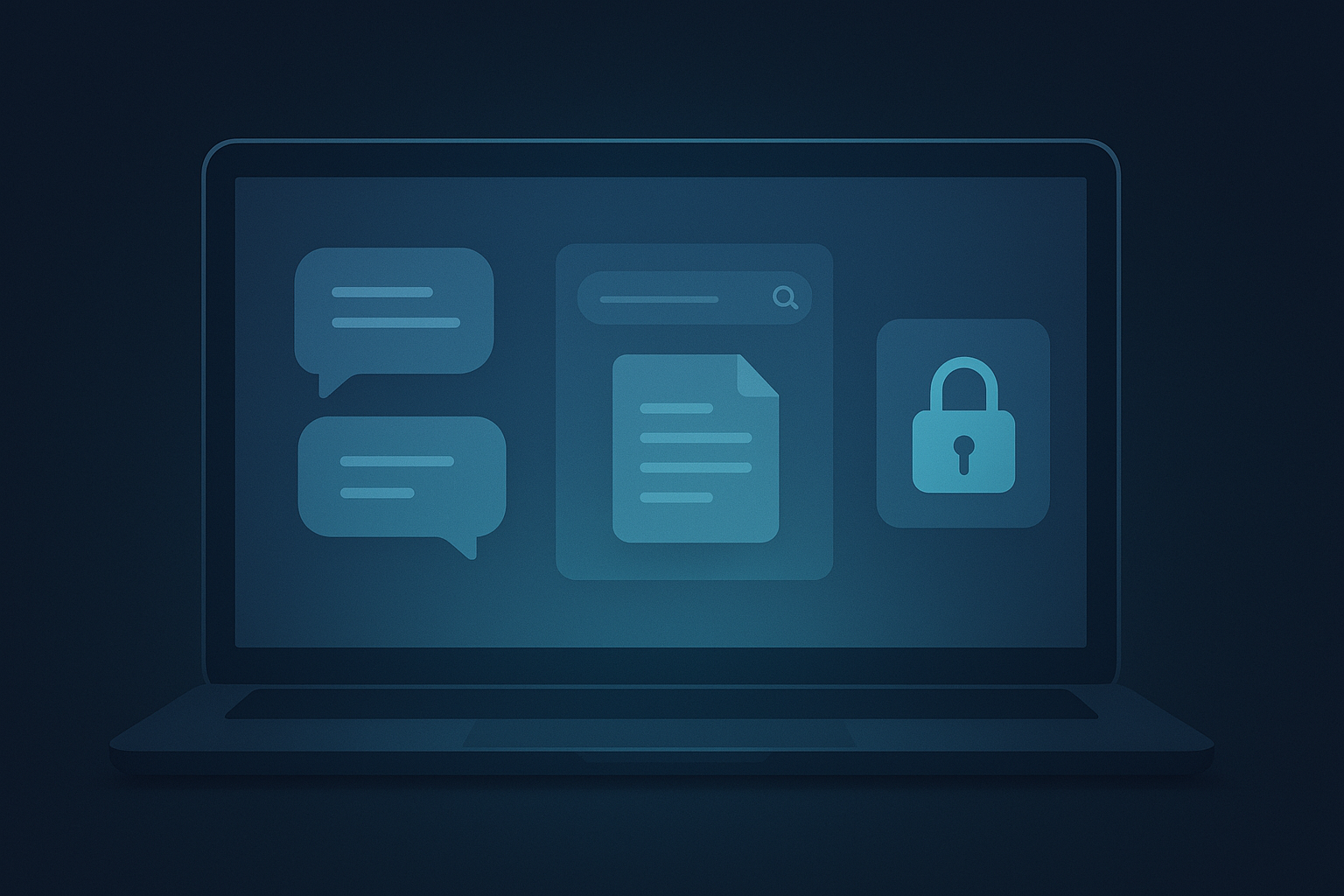
Private AI workspace software keeps chat, memory, and document search inside one secure environment.
How a Privacy-First AI Workspace Protects Your Data
Security is more than a privacy policy; it is engineering. A well-built privacy-first AI workspace layers several technical controls around every request. For instance, incoming prompts can pass through automated guardrails that detect personally identifiable information (PII) — data like names or account numbers that could identify a specific person — and tokenize it before the model ever processes the text.
Furthermore, enterprise and government-grade deployments add jailbreak and prompt-injection detection, which flags attempts to trick the AI into ignoring its safety rules. Above all, post-quantum cryptography — encryption designed to resist attacks from future quantum computers — protects data in transit and at rest. The National Institute of Standards and Technology (NIST) has been standardizing these algorithms because classical encryption will eventually be vulnerable to sufficiently powerful quantum hardware. As a result, organizations adopting CNSA 2.0-aligned cryptography today are positioning themselves ahead of that transition rather than scrambling later.
Setting Up a Private AI Workspace in 5 Steps
Moving from a public chatbot to private AI workspace software does not have to be complicated. Generally, the rollout follows a predictable sequence:
- Define your data boundaries. Decide which documents, client records, or source code are sensitive enough to require a private workspace rather than a public tool.
- Choose a deployment model. Select cloud-hosted, self-hosted, or air-gapped deployment based on compliance needs, since regulated teams often require on-premises control.
- Configure personas and memory. Set up tuned AI personas for specific roles and enable persistent memory so context carries across sessions.
- Connect your knowledge base. Upload internal documents so retrieval-augmented search can answer questions using your organization's own material instead of generic web data.
- Test guardrails and export tools. Verify that PII tokenization, content guardrails, and conversation export all function correctly before rolling the workspace out company-wide.
For a detailed walkthrough, AOCyber's AODex setup guide covers each configuration screen step by step, and the broader AODex documentation explains advanced settings like API routing and persona tuning.
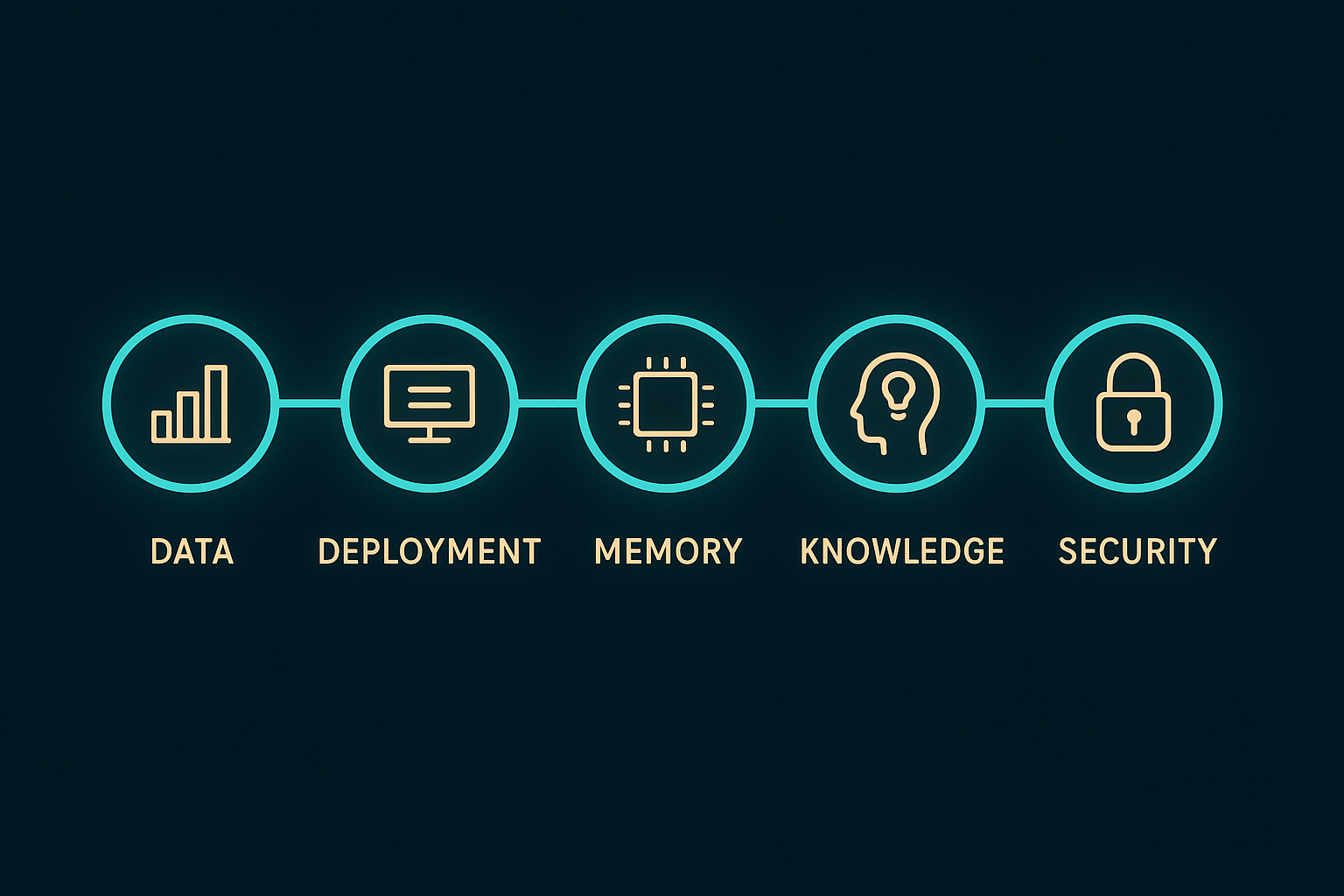
A typical five-step rollout for private AI workspace software, from data boundaries to guardrail testing.
Privacy-First AI Workspace vs. Public AI Chatbots
How does this actually play out in practice? Public chatbots optimize for scale and often monetize usage data or ad personalization. In one widely cited Cisco Data Privacy Benchmark Study, roughly 94% of respondents said they would not buy from a company that fails to protect their data, underscoring why privacy has become a business differentiator rather than a compliance checkbox.
By contrast, private AI workspace software is priced and architected around ownership rather than data collection. Therefore, the business model itself removes the incentive to harvest conversation content, which matters just as much as any individual security feature.
Choosing the Right Private AI Workspace Provider
Not every "private AI" claim holds up under scrutiny. Buyers should verify where the underlying model actually runs, whether the vendor retrains on customer prompts, and what certifications back up security claims.
AOCyber, for example, positions AODex as a private AI workspace for individuals and businesses, paired with AOCore, a unified AI gateway that routes requests to more than 500 models behind a single OpenAI-compatible API while enforcing AOSentry governance controls. For government, defense, and intelligence community customers, AOCyber also offers an IL5-deployable version of AOCore aligned to CMMC Level 3, with air-gapped and SCIF-capable deployment options. Readers evaluating vendor claims around agent ownership and intellectual property may find this related discussion of how AI agents handle IP useful context for due diligence.
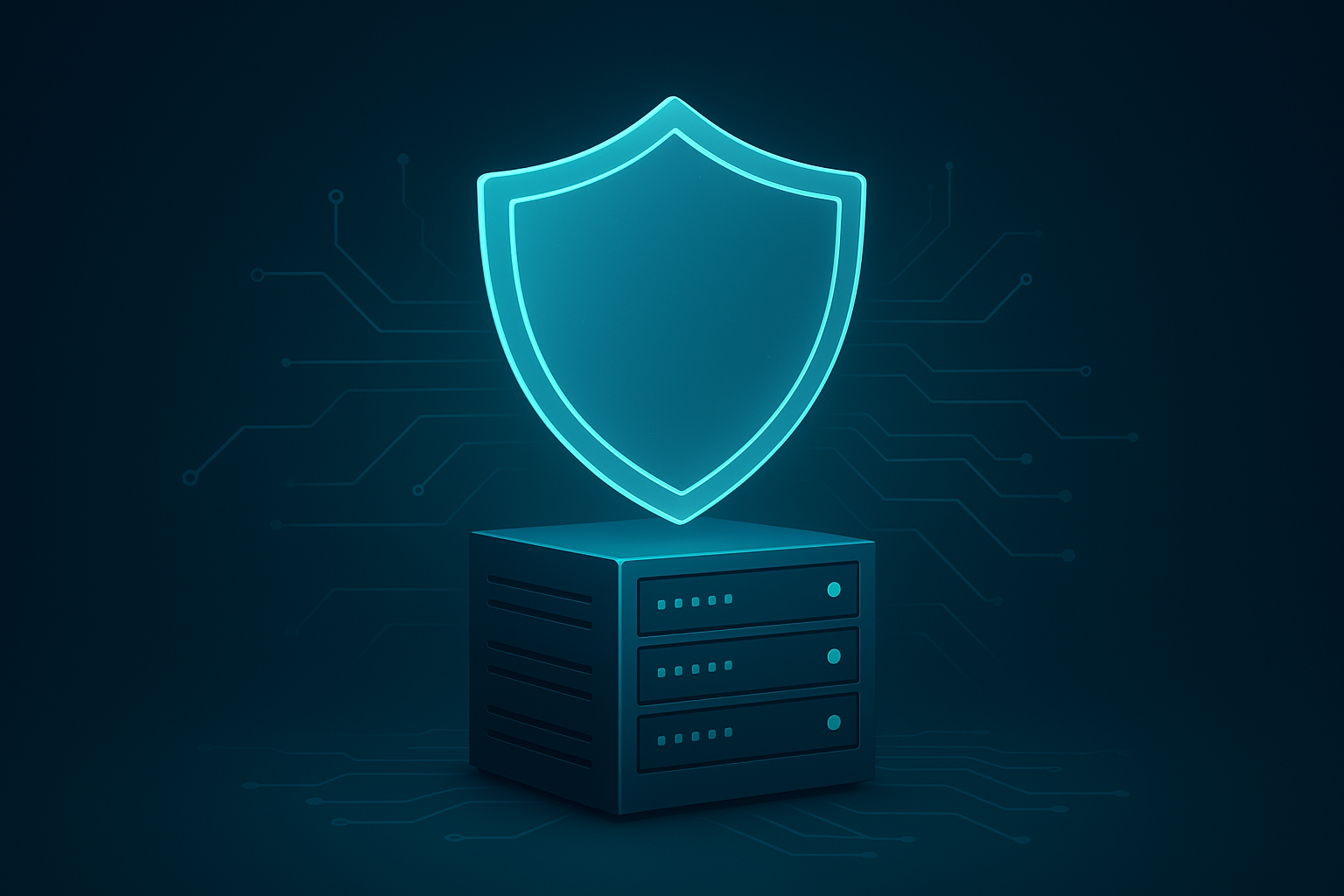
Encryption and guardrails work together to keep a secure AI workspace resistant to misuse.
Frequently Asked Questions About Private AI Workspace Software
What is private AI workspace software?
Private AI workspace software is an AI environment that keeps conversations, documents, and generated content under the user's control instead of a public provider's training pipeline. Tools like AODex combine persistent memory, knowledge-base search, and export options to support that control.
How is a private AI workspace different from ChatGPT or other public AI tools?
Public AI tools generally retain the right to review or train on submitted prompts, while a private AI workspace is architected so the provider does not monetize or train on customer conversations. As a result, sensitive business or government data stays contained within the organization's own environment.
Why does data privacy matter when using AI at work?
Data privacy matters because AI prompts often contain client records, source code, or internal strategy that could create legal or competitive risk if leaked. Regulated industries and government contractors typically require stronger controls than consumer chatbots provide.
How much does private AI workspace software typically cost?
Pricing varies by vendor and usually follows a tiered model based on usage, number of seats, or deployment type such as cloud versus self-hosted. Enterprise and government-grade deployments with dedicated infrastructure and SLAs generally cost more than standard cloud tiers.
How long does it take to set up a private AI workspace?
A basic cloud-hosted private AI workspace can often be configured in a day or two, covering persona setup, knowledge-base uploads, and guardrail testing. Self-hosted or air-gapped deployments for regulated environments take longer because of infrastructure provisioning and compliance review.
What is persistent memory in an AI workspace?
Persistent memory means the AI retains relevant context from earlier conversations instead of starting from zero every session. This lets a private AI workspace act more like a long-term assistant than a disposable chat window.
What is retrieval-augmented search, and why does it matter for privacy?
Retrieval-augmented search, often called RAG, lets the AI pull answers from an organization's own documents rather than relying only on its general training data. Because the knowledge base stays inside the private workspace, sensitive files are not exposed to an external model's training process.
Can individuals and freelancers use private AI workspace software, or is it only for enterprises?
Individuals and freelancers can use private AI workspace software just as effectively as large enterprises, since most providers offer tiered plans scaled to smaller usage volumes. Freelancers often value the same persistent memory and document search features that enterprise teams rely on.
What mistakes do businesses make when adopting AI workspace tools?
A common mistake is assuming any tool labeled "private" avoids data retention without verifying the vendor's actual model-hosting and training practices. Another frequent error is skipping guardrail testing, which leaves PII and prompt-injection risks unaddressed before rollout.
What security features should a secure AI workspace include?
A secure AI workspace should include PII tokenization, content guardrails, jailbreak and prompt-injection detection, and strong encryption such as post-quantum-ready cryptography. Role-based access control and conversation export are also important for auditability.
Can government or defense organizations use private AI workspace software?
Yes, government, defense, and intelligence community organizations can use government-grade versions of private AI workspace software built for IL5-deployable infrastructure, CMMC Level 3 alignment, and air-gapped or SCIF-capable deployments. These versions typically add classified-content detection and CAC/PIV authentication on top of standard workspace features.
Is self-hosting required to use a private AI workspace?
Self-hosting is not required for most users; many private AI workspace providers offer secure cloud deployments that still keep customer data out of model training. Self-hosted or air-gapped options exist primarily for organizations with strict regulatory or classified-data requirements.
Final Thoughts
Choosing private AI workspace software ultimately comes down to trust: does the platform keep your conversations, documents, and generated content under your control, or does it quietly feed a third-party training pipeline? As this article has outlined, persistent memory, retrieval-augmented search, strong guardrails, and transparent deployment options are the features that separate genuine privacy-first tools from repackaged public chatbots. Whether you are a freelancer protecting client work, a growing business safeguarding internal data, or a government team operating under strict compliance mandates, evaluating providers like AOCyber's AODex against these criteria is a practical first step toward adopting AI without trading away data ownership.
