Procurement AI software is reshaping how organizations buy goods and services by automating sourcing, vendor matching, and spend analysis. Instead of relying on spreadsheets and manual approval chains, procurement teams now use intelligent platforms that flag risks, recommend vendors, and route approvals automatically. As a result, purchasing cycles shrink, and finance teams get cleaner, faster data.
Quick answer: Procurement AI software is a business tool that applies machine learning to sourcing, approvals, and vendor management, automating tasks that once required manual review. It typically reduces processing time, catches spend anomalies, and integrates with existing finance or ERP systems.
Even so, not every platform works the same way. Some tools focus narrowly on invoice matching, while others, like AOCyber's Eden Biz suite, combine procurement with CRM, HR, finance, and inventory on one data layer. That difference matters because fragmented systems tend to create the very blind spots AI is supposed to eliminate.
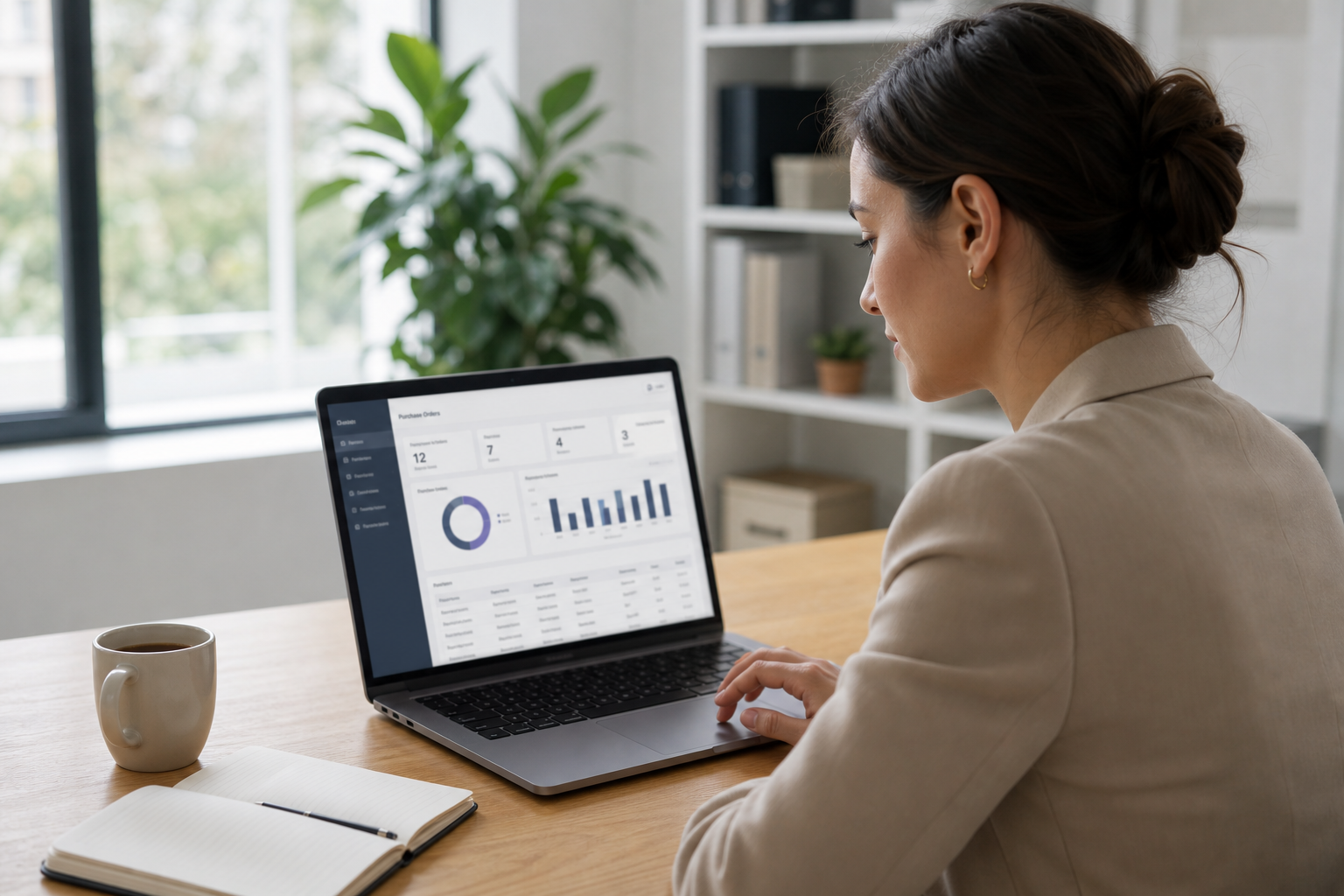
Procurement AI software gives purchasing teams a clearer view of vendor performance and spend trends.
What Is Procurement AI Software?
Procurement AI software is a digital system that uses machine learning and natural language processing to manage purchasing activities. In particular, it automates vendor comparisons, flags unusual invoices, and predicts which suppliers are likely to deliver on time. Unlike basic e-procurement portals, it learns from historical data to improve recommendations over time.
According to the general definition of procurement, the function covers everything from sourcing suppliers to finalizing contracts. Therefore, when AI is layered into that function, it touches nearly every stage of the buying process rather than just one isolated task.
Key Features of AI-Powered Procurement Platforms
Most AI-powered procurement platforms share a common set of capabilities, though depth varies by vendor. Above all, buyers should expect automated vendor scoring, spend categorization, and contract risk flagging as baseline features.
- Automated vendor matching based on price, history, and reliability
- Spend analytics that group purchases by category and department
- Contract review that flags unusual clauses or renewal risk
- Approval routing tied to role-based access and budget thresholds
- Integration with finance, inventory, and document management systems
In addition, security matters as much as functionality. Platforms handling sensitive procurement data should include guardrails such as PII tokenization and access controls, similar to the governance layer described in AOCyber's overview of enterprise agentic AI without vendor lock-in.
Benefits of Intelligent Procurement Systems
Intelligent procurement systems offer measurable benefits beyond simple time savings. For example, faster approval cycles mean fewer stalled purchase orders, which keeps projects and inventory on schedule.
Specifically, teams tend to see improvements in three areas: speed, accuracy, and visibility. Consequently, finance leaders gain cleaner spend data for forecasting, while procurement staff spend less time chasing approvals manually.
The U.S. NIST AI Risk Management Framework, released in 2023, has also pushed many software vendors to document how their AI models make decisions. As a result, buyers evaluating procurement AI software now have more transparency into how vendor-matching and risk-scoring algorithms actually work.
How Procurement Automation Software Works: A Step-by-Step Process
Although every vendor builds its workflow slightly differently, most procurement automation software follows a similar sequence from intake to contract monitoring.
- Capture and standardize request data. The system ingests purchase requests and historical spend data, then standardizes formats so comparisons across departments stay accurate.
- Run AI-driven spend analysis. The platform reviews spending patterns and flags duplicate vendors or categories where supplier consolidation could cut costs.
- Match sourcing to qualified vendors. Models score vendors on price, performance, and risk, then suggest the strongest matches for each request.
- Automate approval routing. Requests route to the correct approver based on role and budget thresholds, cutting manual follow-up.
- Monitor contracts and compliance. After purchase, the system tracks renewal dates and compliance obligations, alerting staff before deadlines.

Inventory and procurement data flow together when AI procurement tools connect to warehouse systems.
Choosing the Right Procurement AI Software
Choosing procurement AI software is less about finding the flashiest dashboard and more about matching features to actual workflow gaps. First, map out where current bottlenecks happen, whether that's vendor vetting, invoice matching, or contract renewal tracking.
Next, confirm how the platform handles your data ownership and portability. This question matters more than many buyers realize, as explained in AOCyber's analysis of why your data isn't a moat for vendors who lock customers in. A platform that exports your data cleanly gives you leverage if you ever need to switch providers.
Finally, consider whether tuned, domain-specific assistance would help your team. Some platforms now offer specialized personas trained on procurement or contract language, a concept covered further in AOCyber's piece on the persona marketplace for domain-specific AI assistants.
Procurement AI Software vs. Traditional E-Procurement Tools
Traditional e-procurement tools digitize forms and approvals but still rely heavily on manual review. In contrast, procurement AI software adds predictive scoring and anomaly detection on top of that digital layer.
| Capability | Traditional Tools | Procurement AI Software |
|---|---|---|
| Vendor matching | Manual comparison | Automated scoring and ranking |
| Spend visibility | Periodic reports | Real-time analytics |
| Risk detection | Reactive, after the fact | Proactive flagging |
Government and Enterprise Procurement Considerations
Government and defense procurement adds layers that commercial software rarely handles. Specifically, agencies working with the Defense Industrial Base often need classified content detection, CAC/PIV authentication, and post-quantum cryptography support.
Buyers verifying vendor eligibility for federal contracts can reference SAM.gov, the official U.S. government system for contractor registration. For organizations needing IL5-deployable, air-gapped procurement and governance tooling, AOCyber's government-grade AOCore platform addresses CMMC Level 3 alignment directly.
Meanwhile, Gartner's enterprise software spending forecasts suggest global investment in business applications, a category that includes procurement platforms, continues climbing past the trillion-dollar mark annually. That spending trend signals that procurement automation software is no longer a niche purchase but a mainstream budget line.

Government buyers often need procurement AI software with added compliance and security layers.
Frequently Asked Questions
What is procurement AI software?
Procurement AI software is a business tool that uses machine learning to manage sourcing, purchasing, vendor evaluation, and spend tracking. It reduces manual data entry and flags risks that humans might otherwise miss.
How does AI improve procurement compared to manual processes?
AI improves procurement by automating repetitive tasks like invoice matching, contract review, and approval routing. As a result, staff spend less time on data entry and more on strategic sourcing decisions.
Is procurement AI software only for large enterprises?
No, these platforms now scale from small businesses to large enterprises and government agencies. Modular systems let smaller teams start with core features and add modules as they grow.
What features should a good procurement AI platform include?
Look for automated vendor matching, spend analytics, contract risk detection, and approval workflows. Security controls, such as role-based access, are equally important for protecting sensitive vendor data.
How much does procurement AI software typically cost?
Pricing varies widely by vendor and deployment size, ranging from per-seat subscriptions to enterprise licensing with dedicated support. Most vendors offer tiered plans and demos before requiring a full commitment.
How long does implementation usually take?
Implementation ranges from a few weeks for cloud-based tools to several months for complex enterprise or government deployments. Data migration and staff training typically take up the most time.
What is the difference between procurement AI software and traditional e-procurement tools?
Traditional e-procurement tools digitize paperwork but still require manual review at most steps. Procurement AI software adds predictive analytics and anomaly detection on top of that digital workflow.
Can procurement AI software integrate with existing ERP systems?
Most modern platforms offer APIs or prebuilt connectors for popular ERP, CRM, and finance systems. However, integration depth depends on the vendor, so confirm compatibility before purchasing.
What common mistakes do companies make when adopting procurement AI software?
Common mistakes include skipping data cleanup before migration and underestimating staff training needs. Rushing rollout without a pilot phase also causes avoidable friction and user resistance.
Is government procurement AI software different from commercial tools?
Yes, government and defense procurement often requires controls such as classified content detection and post-quantum cryptography. Commercial tools rarely meet frameworks like CMMC Level 3 without significant customization.
Final Thoughts on Procurement AI Software
Ultimately, procurement AI software works best when it fits an organization's actual workflow rather than forcing a one-size-fits-all process onto every team. Therefore, start by identifying real bottlenecks, then evaluate platforms based on data ownership, security controls, and integration depth rather than feature lists alone.
In summary, whether you're a small business automating your first purchase orders or a government agency needing air-gapped, CMMC-aligned deployment, the right procurement AI software should reduce manual work without sacrificing visibility or control. Explore AOCyber's procurement-ready business tools to see how a unified data layer can simplify the next step in your sourcing process.

