Secure AI for government agencies is no longer optional — it is the baseline requirement for any system that touches classified networks, defense contracts, or citizen data. As agencies across the Department of Defense (DoD), the Intelligence Community (IC), and the Defense Industrial Base (DIB) adopt large language models and AI copilots, the stakes for data protection, model governance, and compliance have risen sharply. This guide explains what secure AI for government agencies actually requires, how it differs from commercial AI tools, and the steps agencies can take to deploy AI without compromising mission security.
What Is Secure AI for Government Agencies?
Secure AI for government agencies refers to AI infrastructure built specifically to meet federal security, compliance, and data-sovereignty standards, rather than commercial AI tools retrofitted with extra permissions after the fact. In practice, this means IL5-ready hosting, CNSA 2.0 post-quantum cryptography, CMMC Level 3 alignment, and strict controls over where data travels and who can access it.
Consequently, the definition matters because the risks are not abstract. A model that stores prompts on third-party servers, or that cannot detect classified content before it leaves a network, is simply not fit for government use. Therefore, agencies need to evaluate AI platforms the same way they evaluate any other sensitive system component — against a documented control baseline, not a marketing page.
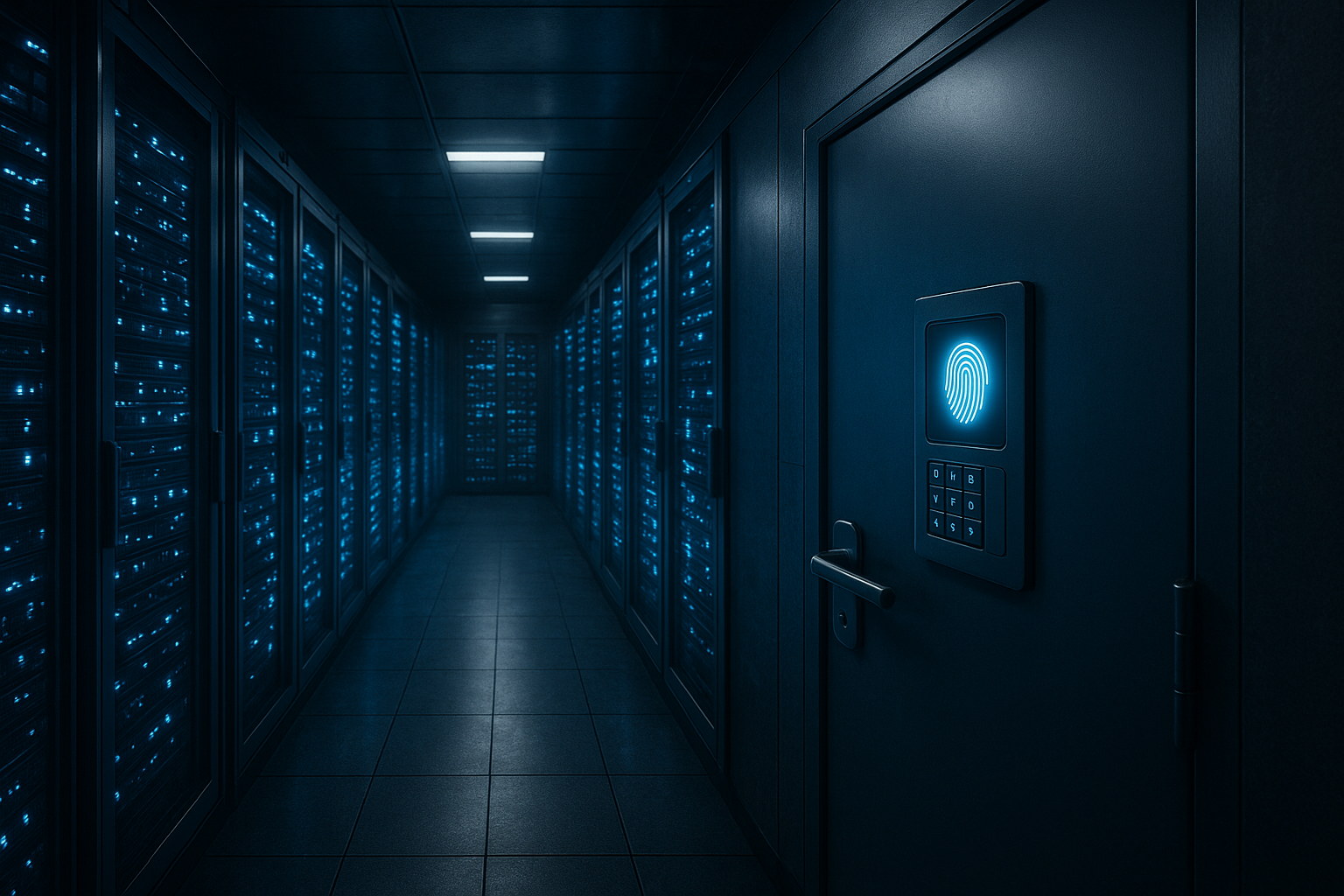
Government-grade AI infrastructure relies on hardened, access-controlled environments rather than shared commercial cloud resources.
Why Government Agencies Need Purpose-Built AI Security
Many federal employees already experiment with public AI chatbots on personal devices, a phenomenon often called shadow AI. In addition, this habit creates a quiet but serious risk: sensitive documents, procurement data, or operational details can end up on servers the agency does not control. For a closer look at how this plays out inside large organizations, see this breakdown of shadow AI already present in enterprise environments.
Similarly, a vendor's privacy policy is not a substitute for a real security architecture. Consumer AI tools are optimized for convenience and scale, not for CAC/PIV authentication or classified content detection. As explained in this analysis of why a privacy policy is not a security strategy, agencies need enforceable technical controls, not promises.
Key Requirements for Government-Grade AI Systems
Above all, a handful of technical and compliance requirements separate government-grade AI from everything else on the market. Each one addresses a specific threat that commercial platforms were never designed to handle.
Impact Level 5 (IL5) Deployment
IL5 deployment allows AI systems to process controlled unclassified information and certain national security systems data within DoD-approved environments. Without this, most AI platforms simply cannot legally handle the workloads defense agencies rely on daily.
CNSA 2.0 Post-Quantum Cryptography
In August 2024, the National Institute of Standards and Technology (NIST) finalized its first set of post-quantum cryptography standards, a milestone agencies now use as a benchmark for long-term data protection. CNSA 2.0, the National Security Agency's companion cryptographic suite, is designed to resist future quantum decryption attacks, which matters because adversaries can harvest encrypted data today and decrypt it once quantum computing matures.
CMMC Level 3 Alignment
CMMC Level 3 represents the highest tier of the DoD's Cybersecurity Maturity Model Certification program. For a detailed walkthrough of how this framework applies specifically to contractors integrating AI tools, read this guide on CMMC compliance and AI for defense contractors.
CAC/PIV Authentication and DISA Integration
Finally, government-grade AI must support Common Access Card (CAC) and Personal Identity Verification (PIV) authentication, along with integration into Defense Information Systems Agency (DISA) networks. The Defense Information Systems Agency publishes technical guidance that any AI platform serving defense users should be built to support.
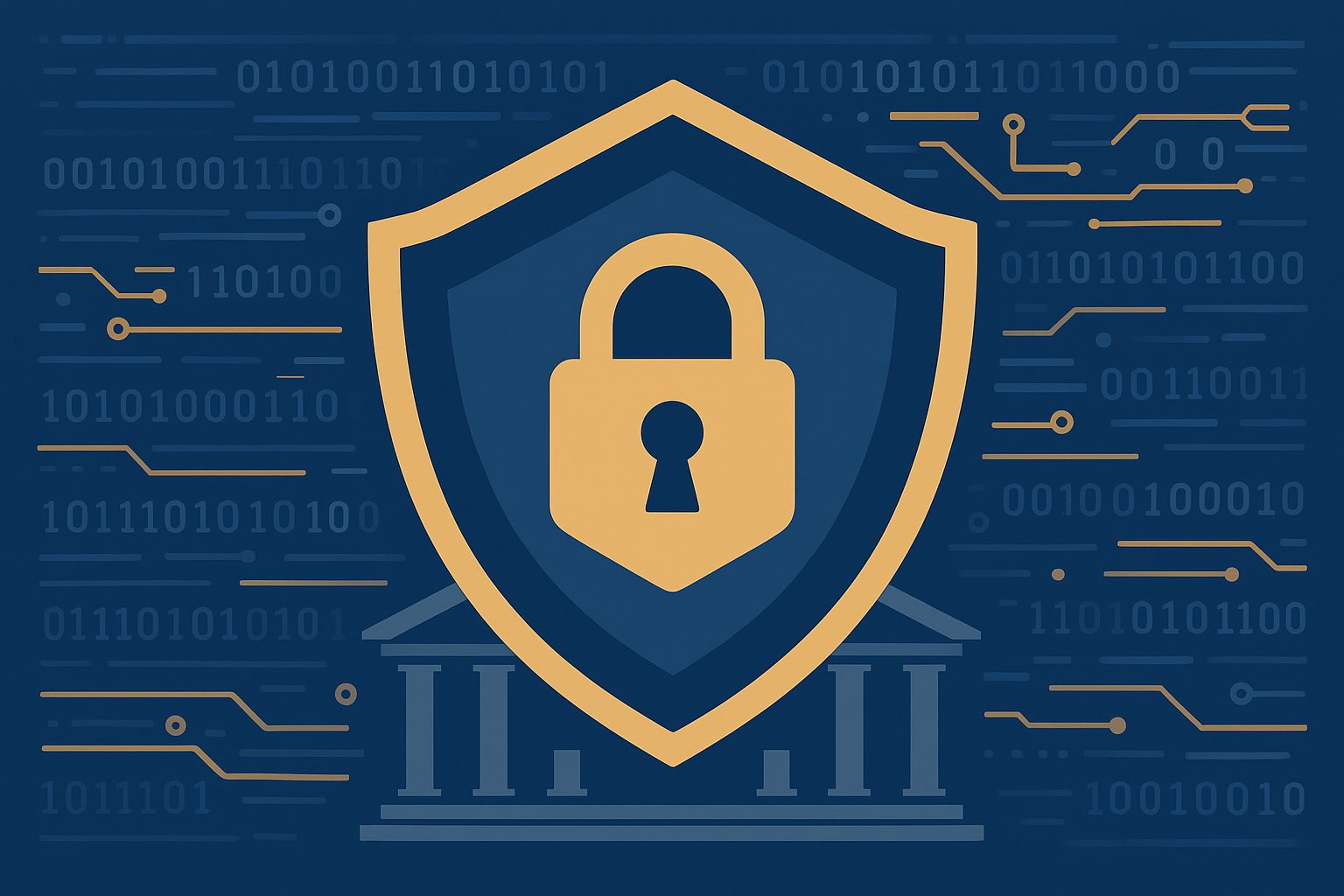
Layered encryption and access controls form the backbone of secure AI for government agencies.
How to Deploy Secure AI in a Government Environment
Deploying AI inside a government agency is not a single purchase decision; it is a process. The following steps outline a practical path from evaluation to agency-wide rollout.
- Assess compliance requirements, identifying whether CMMC Level 3, IL5, or CNSA 2.0 applies based on the data classification your agency handles.
- Map data sensitivity and access needs, documenting which teams require access and whether any workflows demand air-gapped or SCIF-capable deployment.
- Select a government-grade AI gateway that routes every request through a security layer, including PII tokenization, guardrails, and jailbreak detection.
- Pilot the platform with a controlled user group, monitoring audit logs closely to confirm the deployment behaves as expected.
- Scale access agency-wide while maintaining continuous monitoring, budget controls, and periodic reviews against compliance requirements.
For agencies weighing a gateway-first approach across multiple regulated use cases, this overview of AI for regulated industries using a gateway-first approach walks through the reasoning in more depth.
Secure AI for Government Agencies vs. Commercial AI Platforms
In contrast to consumer-grade chatbots, secure AI for government agencies is designed around data sovereignty from day one. Commercial platforms often route prompts through shared infrastructure and, in some cases, retain data for model training. Government-grade platforms, however, keep agency data isolated and never use customer interactions to train shared models.
Furthermore, commercial tools rarely offer classified content detection or CAC/PIV authentication as native features. AOCore, AOCyber's unified AI gateway, addresses this gap by routing requests from over 500 models through a single OpenAI-compatible API layered with AOSentry security and governance controls. Agencies evaluating options for defense, IC, or DIB use cases can review the government-grade AOCore deployment options for IL5-ready, air-gapped, and SCIF-capable configurations.

CAC and PIV authentication remain core requirements for secure AI for government agencies handling sensitive data.
Common Mistakes When Adopting AI in Government Settings
Even well-intentioned agencies stumble when rolling out AI. For instance, allowing staff to use unmanaged consumer chatbots on personal devices creates a quiet data-leakage risk that is difficult to detect after the fact. Similarly, some teams assume that a vendor's terms of service count as a security control, when in reality only enforceable technical measures, such as tokenization and guardrails, actually reduce risk.
Another frequent mistake is skipping the pilot phase entirely. As a result, problems with access control or logging only surface after the platform is already in wide use, making them far more costly to fix. Agencies that instead follow a zero-trust approach — a model described in detail by the zero-trust security model on Wikipedia — tend to catch these issues earlier, since every access attempt is verified rather than assumed trustworthy.
Frequently Asked Questions About Secure AI for Government Agencies
What is secure AI for government agencies?
Secure AI for government agencies is AI infrastructure built specifically to meet federal security, compliance, and data-sovereignty requirements, rather than commercial AI tools adapted after the fact. It typically includes IL5-ready hosting, post-quantum encryption, and strict access controls.
How does secure AI for government agencies differ from commercial AI platforms?
Commercial AI platforms are generally designed for broad consumer or business use and may route data through third-party model providers. Government-grade AI, by contrast, is built around data sovereignty, classified content detection, and compliance frameworks like CMMC and IL5 from the ground up.
Why do government agencies need IL5-ready AI deployment?
IL5 deployment ensures that AI systems can handle controlled unclassified information and certain national security data within DoD-approved hosting environments. Without it, agencies cannot legally process sensitive workloads through many AI platforms.
What is CNSA 2.0 post-quantum cryptography and why does it matter?
CNSA 2.0 is the National Security Agency's updated cryptographic suite designed to resist attacks from future quantum computers. It matters because adversaries can harvest encrypted government data today and decrypt it later once quantum computing matures.
How much does secure AI for government agencies typically cost?
Costs vary widely based on deployment type, user count, and whether the solution is cloud-hosted or air-gapped. Agencies should expect tiered or enterprise pricing models with dedicated infrastructure and SLAs rather than flat consumer-style subscriptions.
How long does it take to deploy government-grade AI?
A standard cloud deployment can take a few weeks, while air-gapped or SCIF-capable installations often take several months due to accreditation and hardware requirements. Timelines depend heavily on existing network infrastructure and compliance documentation.
What is CMMC Level 3 alignment and why does it matter for AI tools?
CMMC Level 3 alignment reflects the highest tier of the Department of Defense's Cybersecurity Maturity Model Certification, required for programs handling the most sensitive controlled unclassified information. AI tools used in these environments must meet the same control baseline as the rest of the contractor's network.
Can secure AI be deployed in air-gapped or SCIF environments?
Yes, purpose-built government AI platforms can run in fully air-gapped or SCIF-capable environments with no external network dependency. This is essential for classified or mission-critical workloads where internet connectivity is prohibited.
What are the most common mistakes agencies make when adopting AI?
The most common mistake is allowing staff to use unmanaged consumer AI tools, often called shadow AI, which creates data leakage risk. Another frequent error is assuming a commercial AI vendor's privacy policy is equivalent to a real security control.
How does AOSentry protect sensitive government data?
AOSentry applies PII tokenization, content guardrails, and jailbreak or prompt-injection detection to every AI request before it reaches a model. It also includes classified content detection designed for defense and intelligence workloads.
What is the difference between IL4 and IL5 AI deployments?
IL4 covers controlled unclassified information in less restrictive environments, while IL5 supports higher-sensitivity data and stricter physical and logical separation requirements. Most mission-critical defense AI workloads require IL5 or higher.
What role does zero-trust architecture play in secure government AI?
Zero-trust architecture assumes no user or system is automatically trusted, requiring continuous verification at every access point. In AI deployments, this limits the damage if a single account or endpoint is compromised.
What best practices should agencies follow when rolling out AI tools?
Agencies should start with a security and compliance assessment before selecting a platform, then require PII tokenization and audit logging by default. It also helps to pilot the deployment with a small group before expanding access agency-wide.
Final Thoughts on Secure AI for Government Agencies
Ultimately, secure AI for government agencies is not about finding the most capable model; it is about finding infrastructure that respects mission requirements, chain of custody, and federal compliance obligations. Agencies that treat AI security as an afterthought risk data exposure, failed audits, and compromised missions. Those that instead build on IL5-ready, CMMC-aligned platforms with post-quantum cryptography put themselves in a far stronger position for the next decade of AI adoption. For agencies and contractors ready to evaluate a purpose-built option, AOCyber's government-grade AOCore platform offers a starting point built specifically around these requirements rather than retrofitted onto a commercial product.
