Defense Industrial Base AI solutions help DoD contractors, subcontractors, and DIB partners adopt artificial intelligence without exposing controlled unclassified information (CUI) or classified workflows to commercial cloud risk. For organizations juggling CMMC audits, IL5 hosting requirements, and legacy IT systems, picking the right AI platform can feel overwhelming. Therefore, this guide breaks down what these solutions actually require, how they differ from consumer AI tools, and what a compliant deployment looks like in practice.
Direct answer: Defense Industrial Base AI solutions are AI platforms, gateways, and workspaces built specifically to meet DoD security mandates such as CMMC Level 3, IL5 hosting, and CNSA 2.0 post-quantum cryptography. As a result, DIB contractors can use generative AI without violating federal contract requirements or exposing CUI to unauthorized systems.
What Are Defense Industrial Base AI Solutions?
Defense Industrial Base AI solutions is a category of software built for the thousands of companies that design, build, and maintain equipment for the U.S. military. According to the Defense Industrial Base, this network includes over 200,000 companies nationwide, ranging from small machine shops to large prime contractors.
In practice, these solutions look similar to any modern AI tool on the surface. They offer chat interfaces, document search, and automation. However, underneath, they add tokenized handling of personal data, content guardrails, jailbreak detection, and hosting options that satisfy federal security frameworks rather than standard commercial terms of service.
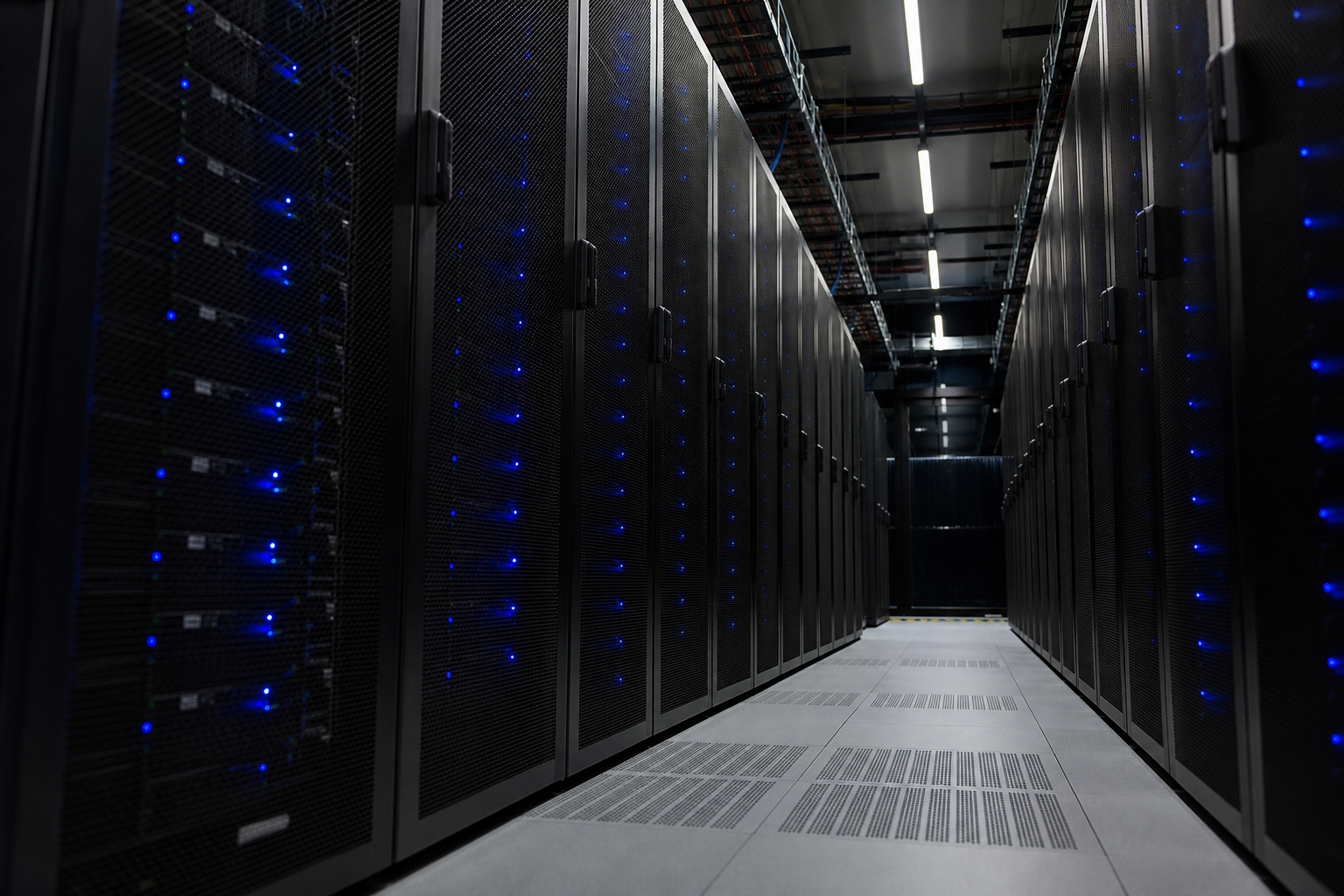
Air-gapped and dedicated hosting is a core feature of serious Defense Industrial Base AI solutions.
Why the Defense Industrial Base Needs Purpose-Built AI Platforms
Consumer AI tools were not built with CUI in mind. For example, many general-purpose chatbots store conversation history on shared infrastructure, which creates exposure risk for contractors handling sensitive program data. In contrast, DIB-focused platforms isolate data, limit retention, and log every interaction for audit purposes.
Furthermore, supply chain attacks against defense contractors have increased in recent years, according to NIST Special Publication 800-171, which outlines the baseline protections contractors must implement for CUI. Specifically, AI tools that ignore these controls can become a new, unmonitored entry point for data loss. Consequently, security teams increasingly treat AI procurement as a compliance decision, not just a productivity one.
Core Compliance Requirements for DIB AI Solutions
Several overlapping frameworks shape what a compliant AI deployment actually looks like inside a defense contractor's environment. Below are the four requirements that matter most.
CMMC Level 3 Alignment
The Cybersecurity Maturity Model Certification program verifies that contractors handling CUI implement specific security practices. As a result, any AI platform touching that data should document how it supports these controls. A detailed breakdown of this topic is available in our guide on CMMC-compliant AI software for defense contractors.
IL5-Deployable Architecture and CNSA 2.0 Cryptography
Impact Level 5 hosting adds stricter physical and network isolation requirements for CUI workloads. Similarly, CNSA 2.0, the NSA's updated cryptographic suite, protects data against future quantum computing threats. Together, these two standards form the backbone of most serious Defense Industrial Base AI solutions.
Air-Gapped, SCIF-Capable Deployments and CAC/PIV Access
For the most sensitive workflows, nothing should leave the secure network. That is why air-gapped and SCIF-capable deployment options matter, particularly for programs involving classified content detection. In addition, CAC/PIV authentication ties every AI session to a verified individual identity rather than a shared login.

CAC/PIV-authenticated access keeps every AI session tied to a verified individual.
How AOCore Powers Defense Industrial Base Compliance
AOCore, the unified AI gateway from aocyber.ai, routes requests through a single OpenAI-compatible API to more than 500 models while applying AOSentry, a built-in security and governance layer. Specifically, AOSentry handles PII tokenization, content guardrails, and jailbreak or prompt-injection detection on every request.
For government and DIB customers, a dedicated configuration of AOCore supports IL5-deployable hosting, CMMC Level 3 alignment, CNSA 2.0 cryptography, and air-gapped or SCIF-capable deployments with CAC/PIV and DISA-aligned access controls. Readers evaluating a broader gateway platform may also find it useful to review our overview of an enterprise AI gateway platform's top features, and our dedicated page on AOCore for government deployments.
Step-by-Step: Deploying AI Across the Defense Industrial Base
Rolling out AI safely inside a defense contractor environment generally follows the same five-step pattern, regardless of company size.
- Map CUI boundaries. Inventory where controlled unclassified information lives across systems, teams, and contracts so you know exactly which workflows an AI tool is allowed to touch.
- Select a governed AI gateway. Choose a platform with built-in PII tokenization, content guardrails, and jailbreak detection rather than bolting security onto a general-purpose chatbot after the fact.
- Align architecture to CMMC and IL5. Confirm the hosting environment, encryption standards, and access controls satisfy CMMC Level 3 practices and, where required, DoD Impact Level 5 hosting rules.
- Configure CAC/PIV authentication and logging. Enable Common Access Card or PIV-based identity verification and turn on detailed audit logging so every AI interaction can be traced during a security review.
- Pilot, then scale. Start with a low-risk, non-classified workflow, measure accuracy and security outcomes, and expand the AI deployment across additional teams once the pilot proves stable.
For a step-by-step walkthrough aimed specifically at public-sector buyers, our guide to secure AI for government agencies covers similar procurement considerations in more depth.

Piloting a single workflow first reduces risk before scaling AI across a defense contractor's teams.
Common Mistakes When Choosing AI Platforms for Defense Contractors
Even well-intentioned teams run into trouble when adopting AI quickly. A few mistakes show up repeatedly across DIB organizations.
First, employees sometimes paste CUI into unapproved consumer chatbots simply because it is faster than the approved tool. Second, teams assume a vendor's general "enterprise" plan automatically meets DoD requirements without reviewing actual CMMC or IL5 documentation. Third, organizations skip PII tokenization, which increases exposure if a model output is logged or shared outside the intended audience. Finally, many deployments lack sufficient audit logging, making it difficult to prove compliance during a review.
Defense Industrial Base AI Solutions vs. Commercial AI Tools
The table below summarizes the practical differences between a typical commercial AI tool and a purpose-built platform for the DIB.
| Capability | Commercial AI Tool | DIB AI Solution |
|---|---|---|
| CUI handling | Not controlled | Tokenized and access-restricted |
| Hosting | Shared commercial cloud | IL5-deployable, air-gapped option |
| Encryption | Standard TLS | CNSA 2.0 post-quantum ready |
| Identity | Email/password | CAC/PIV, DISA-aligned |
| Compliance mapping | None documented | CMMC Level 3 aligned |
Frequently Asked Questions
What are Defense Industrial Base AI solutions?
Defense Industrial Base AI solutions are AI platforms engineered for DoD contractors and subcontractors, combining generative AI features with CMMC, IL5, and CNSA 2.0 compliance controls. They protect controlled unclassified information while still letting teams use chat, search, and automation tools.
How do Defense Industrial Base AI solutions differ from consumer AI chatbots?
Consumer chatbots typically run on shared commercial infrastructure and may retain data for model training. DIB-focused platforms instead offer tokenized data handling, dedicated or air-gapped hosting, and audit trails suited to federal contract requirements.
Why do DIB contractors need CMMC-aligned AI platforms?
DoD contracts increasingly require CMMC certification to prove NIST SP 800-171 controls are in place. Using an AI tool that is not CMMC-aligned can put a contractor's certification status, and future contracts, at risk.
What does IL5-deployable mean for defense AI software?
IL5-deployable means the software can be hosted in environments meeting DoD Impact Level 5 standards for controlled unclassified information. This typically involves stricter physical, network, and personnel security controls than commercial cloud hosting.
Can Defense Industrial Base AI solutions run in air-gapped environments?
Yes, several platforms support air-gapped or SCIF-capable deployments so no traffic leaves the secure network. This is essential for workflows involving classified content detection or highly sensitive program data.
What is CNSA 2.0 post-quantum cryptography?
CNSA 2.0 is the National Security Agency's updated suite of cryptographic algorithms designed to resist future quantum computing attacks. AI platforms built for defense use adopt it to future-proof encrypted data and communications.
How much do defense-grade AI platforms typically cost?
Pricing varies widely based on deployment model, model usage, and whether dedicated infrastructure is required. Most vendors offer tiered pricing plus custom enterprise or government quotes for air-gapped or on-premises deployments.
How long does a compliant AI gateway deployment usually take?
A cloud-hosted, CMMC-aligned deployment can often go live in a few weeks. Air-gapped or SCIF-capable installations usually take longer because of hardware provisioning, accreditation reviews, and network isolation testing.
What mistakes do defense contractors make when adopting AI tools?
Common mistakes include letting employees use unapproved consumer chatbots with CUI, skipping PII tokenization, and assuming a vendor's general enterprise plan meets DoD security requirements without verifying CMMC or IL5 documentation.
What should contractors look for when choosing a DIB AI vendor?
Look for documented CMMC Level 3 alignment, IL5-ready architecture, PII tokenization, jailbreak and prompt-injection detection, and flexible deployment options including on-premises or air-gapped hosting.
Do Defense Industrial Base AI solutions require FedRAMP authorization?
Not always. FedRAMP is a separate federal cloud accreditation, and some providers meet IL5 and CMMC requirements while pursuing FedRAMP in parallel. Contractors should confirm a vendor's current authorization status before relying on it for a specific contract.
How does AOSentry protect sensitive data in defense AI workflows?
AOSentry is a governance layer that applies PII tokenization, content guardrails, and jailbreak or prompt-injection detection to every request passing through the AI gateway. This reduces the risk of CUI or classified content leaking into model outputs.
Final Thoughts
Choosing among Defense Industrial Base AI solutions ultimately comes down to one question: does the platform treat compliance as a core feature, not an afterthought? CMMC alignment, IL5-deployable hosting, CNSA 2.0 cryptography, and air-gapped options are not optional extras for serious DIB contractors; they are the baseline. Therefore, before rolling out any AI tool, verify these controls directly rather than relying on general marketing claims. With the right governance layer in place, defense contractors can gain real productivity benefits from AI without putting certifications, contracts, or sensitive data at risk.

