Post-quantum cryptography AI solutions are AI platforms that protect prompts, documents, and model traffic with encryption built to withstand future quantum computers. If your AI tools handle data that must stay secret for years, this guide explains the threat, the standards, and what to check before you buy.
Quick answer: A quantum-safe AI platform uses NIST-standardized algorithms, such as ML-KEM, to protect data in transit and at rest. It also adds governance controls like PII protection and audit logs. Encryption alone is not enough.
What Are Post-Quantum Cryptography AI Solutions?
They combine two things: an AI system and cryptography that quantum computers are not expected to break. Today's common public-key methods, such as RSA and elliptic curves, could be broken by a large quantum computer. Post-quantum algorithms rely on different math problems that remain hard even for quantum machines.
In practice, this means the connections, keys, and signatures behind an AI service use quantum-resistant methods. Therefore, a conversation recorded today stays unreadable later.
Why Quantum-Safe AI Matters Before Quantum Computers Arrive
The main risk is called "harvest now, decrypt later." Adversaries copy encrypted traffic today and wait until they can decrypt it. As a result, the danger starts well before a capable quantum computer exists.
AI makes this worse. Prompts often contain contracts, source code, health details, and strategy. Knowledge bases connected to AI hold even more. Much of that information stays valuable for a decade or longer.
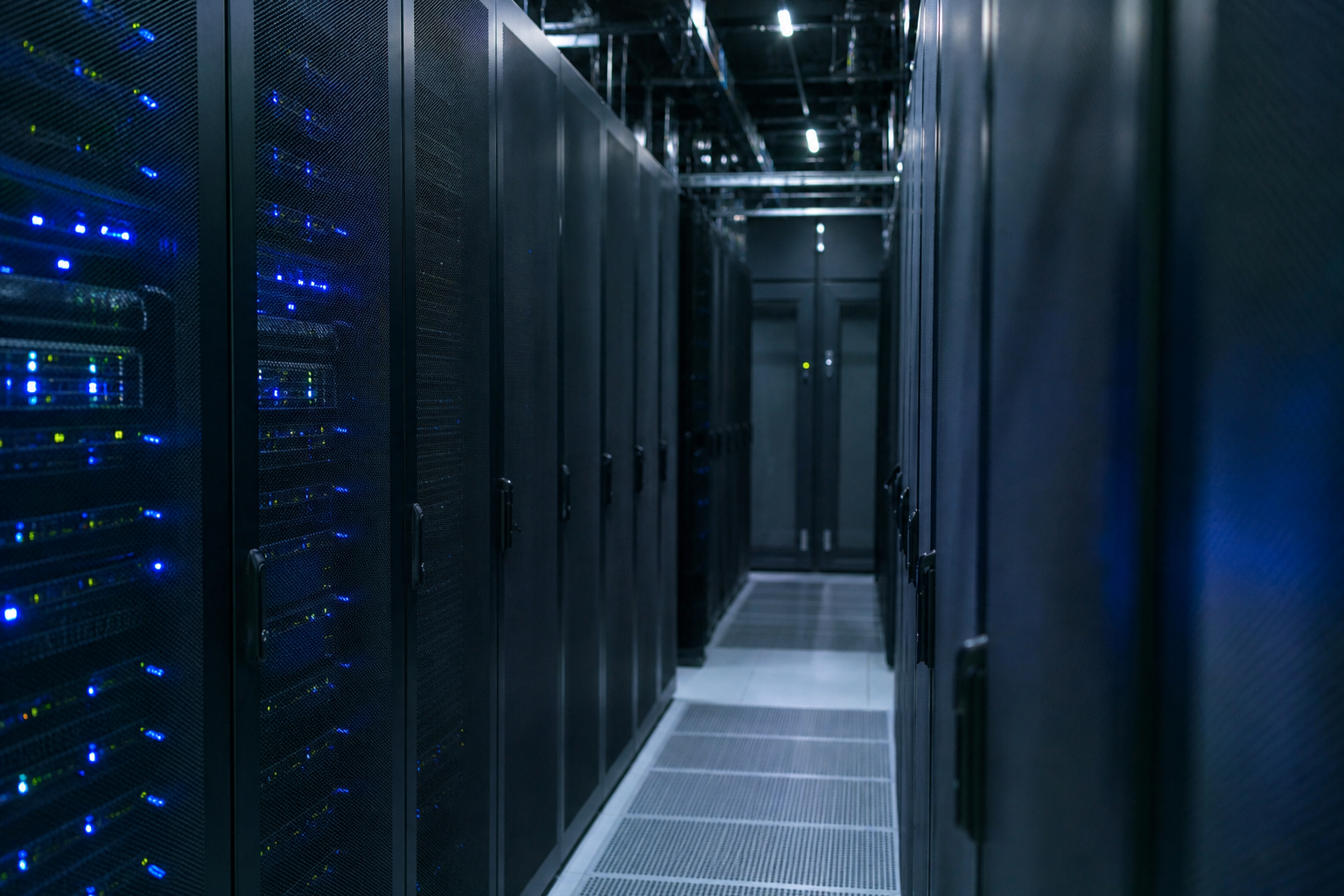
Secure infrastructure is where post-quantum cryptography AI solutions do their work.
Which Standards Define Quantum-Resistant Encryption?
In August 2024, the U.S. National Institute of Standards and Technology (NIST) published its first three post-quantum standards. They are summarized below.
| Standard | Algorithm | Purpose |
|---|---|---|
| FIPS 203 | ML-KEM | Key establishment |
| FIPS 204 | ML-DSA | Digital signatures |
| FIPS 205 | SLH-DSA | Backup signature method |
For national security systems, the NSA's CNSA 2.0 suite sets additional requirements and transition timelines. Background on the field is also available in this overview of post-quantum cryptography.
What a Secure AI Platform Needs Beyond Encryption
Strong cryptography protects data on the wire. However, it does not stop an employee from pasting a Social Security number into a prompt. Nor does it stop a prompt-injection attack. A complete platform therefore adds several layers:
- PII tokenization, so sensitive values never reach a model in plain form.
- Content guardrails and jailbreak or prompt-injection detection.
- Role-based access, budget controls, and audit logs.
- Clear data ownership, with no training on customer data.
For a deeper look at the government side, see what government-grade AI encryption really means and the complete guide to secure AI for government agencies.
How aocyber.ai Approaches Quantum-Safe AI
aocyber.ai, headquartered in Topsham, Maine, builds privacy-first AI software. Its AOCore gateway offers one OpenAI-compatible API that routes to 500+ models. The AOSentry layer adds PII tokenization, content guardrails, and jailbreak and prompt-injection detection.
For defense and intelligence customers, the government-grade AOCore edition is IL5-deployable and uses CNSA 2.0 post-quantum cryptography. It aligns with CMMC Level 3 and supports air-gapped, SCIF-capable deployments. It also supports CAC/PIV authentication. You can read about the day-one approach to post-quantum cryptography and CAC/PIV-integrated AI access. The full product range is on the aocyber.ai homepage.

Teams should review cryptography and governance together before adopting an AI platform.
How to Evaluate Quantum-Safe AI Vendors
Follow these steps to compare options in a structured way.
- Classify your data. List what your AI tools touch and mark what must stay confidential for ten years or more.
- Inventory your cryptography. Document the algorithms, key lengths, and certificates used across AI workflows.
- Check standards alignment. Ask which NIST FIPS 203, 204, or 205 algorithms the vendor implements.
- Review governance controls. Confirm PII protection, guardrails, audit logs, and data ownership terms.
- Pilot, then phase the rollout. Test one sensitive workload, measure performance, and expand gradually.
Common Mistakes When Adopting Quantum-Safe AI
First, many teams wait until quantum computers arrive. By then, harvested data is already exposed. Second, some skip the cryptographic inventory and cannot tell what needs replacing. Third, buyers accept vague claims such as "quantum-ready" without asking which algorithms are used and where.
Finally, teams often overlook key management and third-party data flows. In short, ask for specifics and verify them.
Frequently Asked Questions
What are post-quantum cryptography AI solutions?
They are AI platforms that protect data, prompts, and model traffic with encryption designed to resist quantum computers. They typically combine NIST-standardized algorithms with governance controls.
Why does AI data need quantum-resistant encryption now?
Attackers can store encrypted data today and decrypt it once quantum computers mature. AI conversations and knowledge bases often hold information that stays sensitive for many years.
Which algorithms did NIST standardize?
In August 2024, NIST published FIPS 203 (ML-KEM), FIPS 204 (ML-DSA), and FIPS 205 (SLH-DSA). ML-KEM handles key establishment, while the other two handle digital signatures.
What is harvest now, decrypt later?
It is a strategy where adversaries collect encrypted traffic today and decrypt it later with a quantum computer. It makes long-lived secrets vulnerable well before quantum machines are common.
What is CNSA 2.0?
CNSA 2.0 is the National Security Agency's suite of quantum-resistant algorithms for national security systems. It sets transition timelines for vendors serving defense and intelligence customers.
Does post-quantum encryption slow down AI responses?
The overhead is usually small compared with model inference time. Key sizes and handshakes are larger, but they rarely affect the user's experience noticeably.
Is post-quantum cryptography the same as quantum cryptography?
No. Post-quantum cryptography uses classical math that quantum computers cannot easily break, and it runs on ordinary hardware. Quantum cryptography relies on quantum physics, such as quantum key distribution.
Do I need to replace all my encryption at once?
No. Most organizations migrate in phases, starting with an inventory and the most sensitive, longest-lived data. Hybrid modes that combine classical and post-quantum algorithms ease the transition.
What should I ask a vendor about post-quantum cryptography AI solutions?
Ask which algorithms are used, where they apply, and whether implementations are validated. Also ask about key management, data ownership, and whether your data is used for model training.
Who needs quantum-safe AI most?
Government, defense, healthcare, finance, and legal organizations face the highest risk. Any team handling data that must stay confidential for a decade or more should plan for it.
Does encryption alone make an AI platform secure?
No. You also need access control, PII protection, guardrails against prompt injection, and audit logging. Encryption protects data in transit and at rest, not model misuse.
What are common mistakes when adopting quantum-safe AI?
Common errors include waiting for quantum computers to arrive, skipping a cryptographic inventory, and trusting vague marketing claims. Another is ignoring key management and third-party data flows.
Conclusion
Quantum computers may be years away, but the data your AI tools handle today could be exposed long before then. Post-quantum cryptography AI solutions address that risk with NIST-standardized algorithms and, ideally, strong governance on top. Start by classifying your data, inventory your cryptography, and ask vendors for specifics. Then pilot and expand in phases.

