SCIF-capable AI software is AI software that can be installed and run inside a Sensitive Compartmented Information Facility with no internet connection and no outside dependencies. For government and defense teams, that single requirement removes most mainstream AI tools from consideration. This guide explains what the label should mean, what to check, and how to evaluate vendors.
What Is SCIF-Capable AI Software?
It is AI that works inside a SCIF, a secured space for handling classified intelligence. Because these spaces are isolated, the software cannot depend on cloud APIs, online license checks, or telemetry.
In practice, the models, the search index, and the user interface all live on hardware inside the enclave. Therefore, the vendor must support offline installation and offline updates.
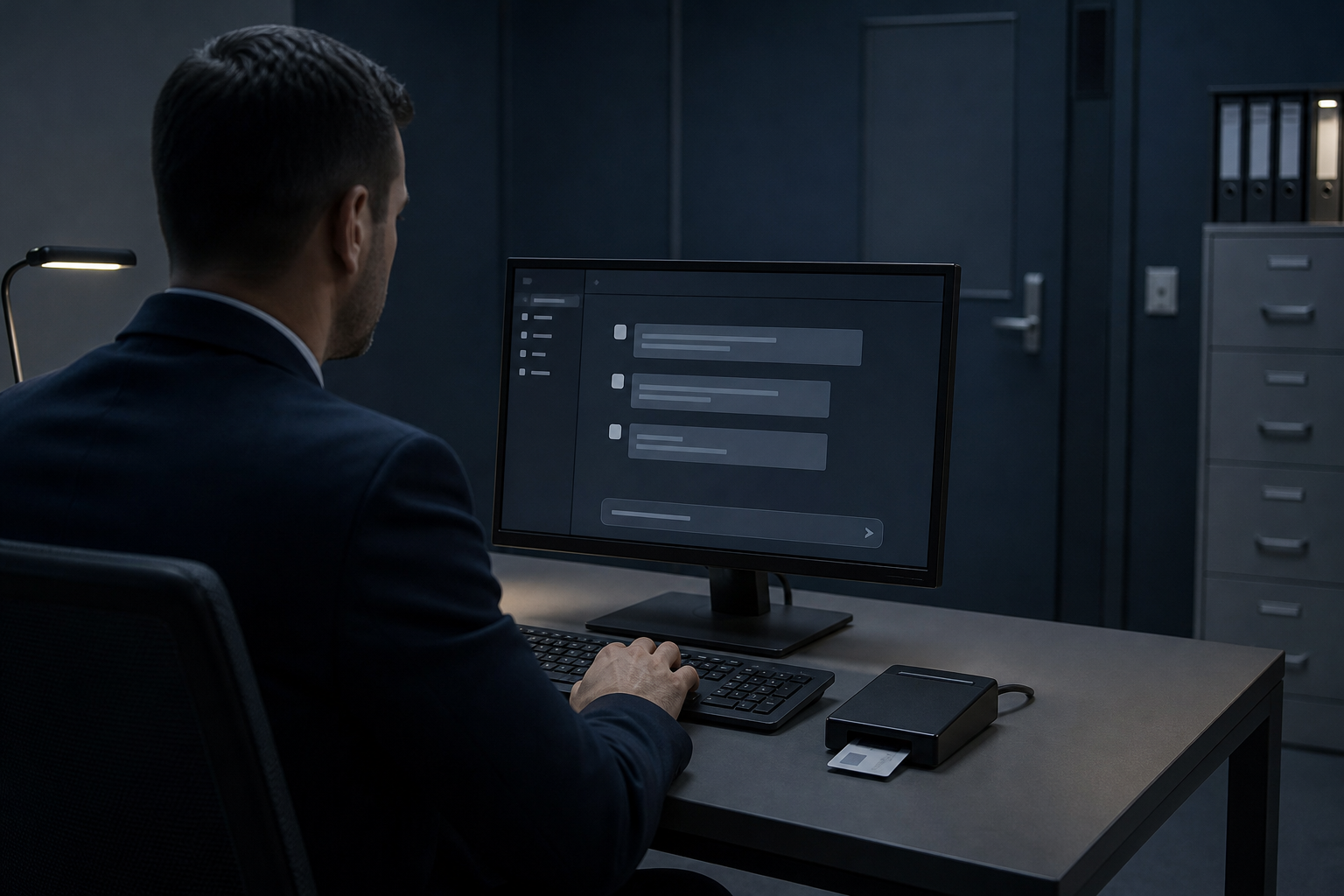
A smart card reader and isolated workstation are typical of SCIF-capable AI software deployments.
Why Cloud AI Tools Fall Short in Classified Spaces
Most popular AI services send prompts to remote servers. However, SCIF policy generally prohibits that kind of outbound connection. As a result, even a strong commercial tool may be unusable.
Also, "private" does not mean "air-gapped." A private cloud instance still needs a network path. Air-gapped AI, in contrast, runs on systems physically isolated from unsecured networks.
Core Requirements for Air-Gapped AI Deployment
Fully Offline Operation
Installation, licensing, inference, and updates must all work without internet access. Updates should arrive as signed packages that your security team can scan and approve.
Identity and Access Control
Smart-card login ties every action to a verified person. For more detail, see this overview of CAC/PIV-integrated AI for secure government access.
Cryptography and Data Handling
Classified data can remain sensitive for decades. Consequently, buyers increasingly ask about CNSA 2.0 post-quantum cryptography, published by the National Security Agency. Prompts, outputs, and logs must also stay on local storage and never be used for model training.
Governance Controls
Audit logs, role-based permissions, content guardrails, and detection of prompt injection help keep AI use within policy. Additionally, classified content detection can flag material that is in the wrong place.
Impact Levels, CMMC, and Accreditation
Software does not make a facility compliant by itself. Your authorizing official decides what is acceptable. Still, vendors can align with frameworks such as DoD Impact Level 5 and CMMC, which makes accreditation easier.
Contractors should also review the defense industrial base AI solutions guide for how these requirements apply to supply-chain work.
How to Evaluate SCIF-Capable AI Software Step by Step
- Confirm the authorizing official's requirements, including baseline, impact level, and data rules.
- Verify offline operation for install, licensing, updates, and inference.
- Check CAC/PIV support, role-based access, and required cryptography.
- Document where models run and where prompts, outputs, and logs are stored.
- Pilot in a representative enclave and share audit results with your accreditation team.
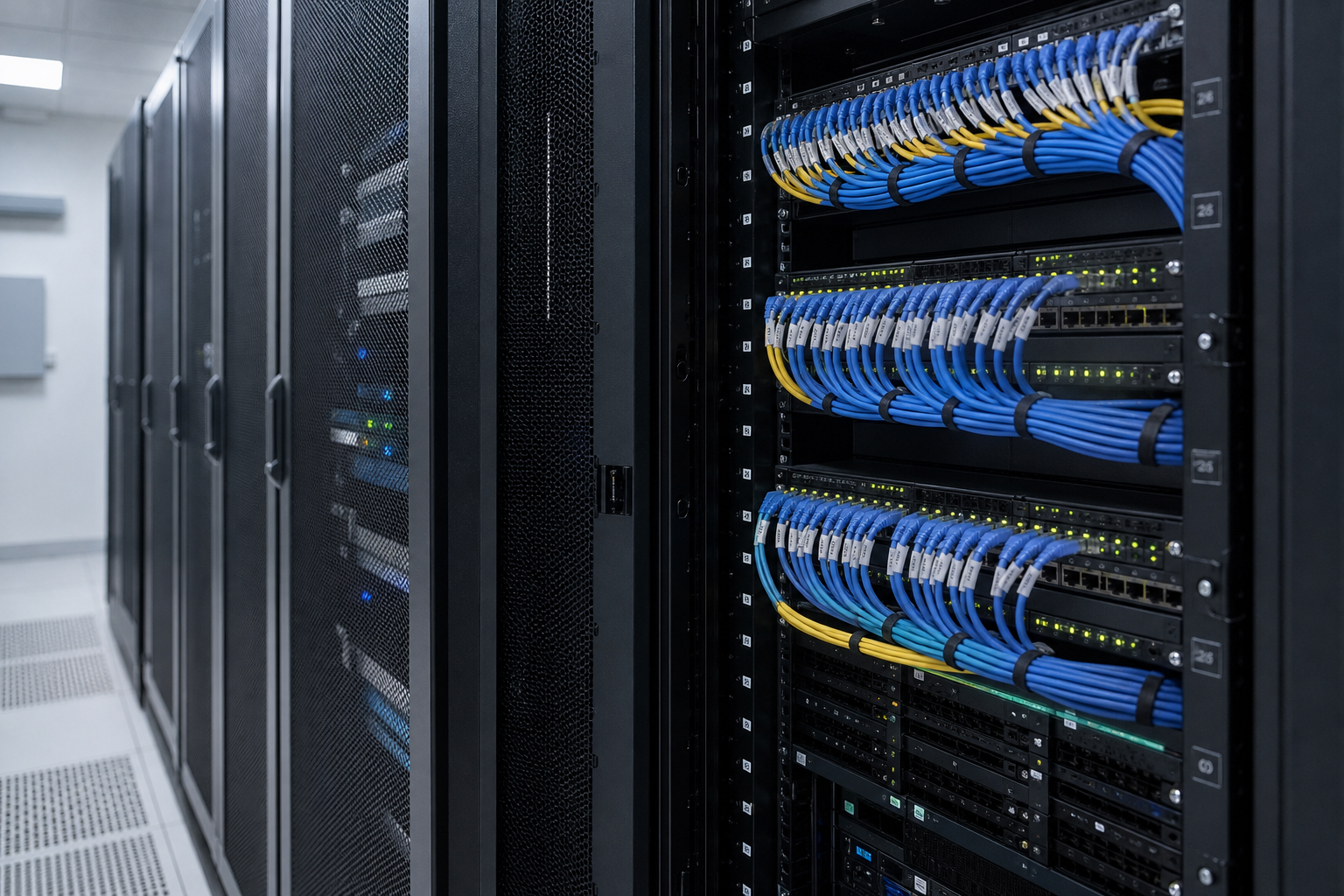
Local infrastructure keeps models and data inside the enclave.
Where an AI Gateway Fits in a Secure Enclave
A gateway gives users one controlled entry point to many models. Therefore, policy, logging, and guardrails apply the same way everywhere. Learn more in this piece on building a multi-model AI strategy.
Options for Classified AI Deployment
aocyber.ai offers government-grade AOCore for DoD, intelligence community, and defense industrial base customers. It is IL5-deployable, supports CNSA 2.0 post-quantum cryptography, aligns with CMMC Level 3, and can be deployed air-gapped or in a SCIF. It also supports CAC/PIV and classified content detection. See the AOCore government page for details. The company does not currently hold FedRAMP authorization.
For lower-sensitivity work, a private AI workspace may be enough. Always match the tool to the data classification.
Frequently Asked Questions
What is SCIF-capable AI software?
SCIF-capable AI software is AI software that can be deployed and operated inside a Sensitive Compartmented Information Facility without internet access or external dependencies. It must run on isolated infrastructure and support the security controls the facility requires.
What is a SCIF?
A SCIF is a Sensitive Compartmented Information Facility, a secured room or building used to process classified intelligence information. Physical, technical, and procedural controls protect it.
Can cloud AI tools be used in a SCIF?
Generally no. Public cloud AI services require network connections that SCIF rules typically prohibit. Software must run locally on accredited systems.
What does air-gapped AI mean?
Air-gapped AI runs on systems physically isolated from unsecured networks such as the internet. Models, updates, and data move in only through controlled procedures.
How do updates work in an air-gapped environment?
Updates are delivered as signed packages through approved transfer media or cross-domain processes. Your security team scans and approves them before installation.
Does SCIF-capable AI software need CAC/PIV support?
In most DoD and intelligence settings, yes. Smart-card authentication ties each user to a verified identity and supports auditing.
What is CNSA 2.0 and why does it matter?
CNSA 2.0 is the NSA's Commercial National Security Algorithm Suite 2.0, which sets post-quantum cryptography requirements for national security systems. Software meant for long-lived classified data should plan for it.
How is SCIF-capable AI software different from a standard private AI tool?
A standard private AI tool may still call outside services or require online licensing. SCIF-capable AI software must work fully offline and meet accreditation, identity, and audit requirements.
Is an AI gateway useful inside a SCIF?
Yes. A gateway gives one controlled entry point for models, with logging, access control, and content guardrails applied consistently.
What are common mistakes when buying AI for classified environments?
Common mistakes include assuming a cloud product can be "turned offline", skipping early talks with the authorizing official, and ignoring license and update mechanics. Another is overlooking where logs and prompts are stored.
How long does it take to deploy AI in a SCIF?
Timelines vary widely because accreditation drives the schedule. Technical installation can be quick, but approvals often take longer.
Does aocyber.ai offer SCIF-capable deployments?
Yes. Government-grade AOCore supports air-gapped and SCIF-capable deployments for DoD, intelligence community, and defense industrial base customers. Specifics depend on each program's requirements.
Conclusion
Choosing SCIF-capable AI software comes down to proof, not promises. Look for true offline operation, smart-card identity, modern cryptography, local data handling, and a clear path to accreditation. Start with your authorizing official, test in a representative enclave, and use the checklist above to compare vendors with confidence.

